Crash Games Ignite Mobile Wagering: Metrics Unpack Volatility's Pull on New Players
Crash Games Ignite Mobile Wagering: Metrics Unpack Volatility's Pull on New Players

The Surge of Crash Games in Mobile Betting
Crash games have taken mobile wagering by storm, drawing in players with their simple yet heart-pounding mechanics where a multiplier climbs until it randomly crashes, and bettors must cash out before the drop to secure wins. Platforms report explosive growth; data from early 2026 shows these titles accounting for 28% of all mobile casino sessions globally, up from just 12% two years prior, as developers optimize for touchscreens and quick-play formats that fit seamless into commutes or breaks. New players, particularly those under 25, flock to them because the volatility delivers instant highs and lows, turning casual scrolls into edge-of-seat decisions.
What's interesting is how this format thrives on smartphones; sensors track average session times hitting 15 minutes for crash variants versus 8 for slots, according to aggregated platform analytics released in March 2026. And while traditional table games lag on mobile due to complex interfaces, crash games strip everything down to a single graph and a cash-out button, making them perfect for on-the-go action that keeps users coming back.
Decoding the Appeal: Volatility Hooks Newcomers Fast
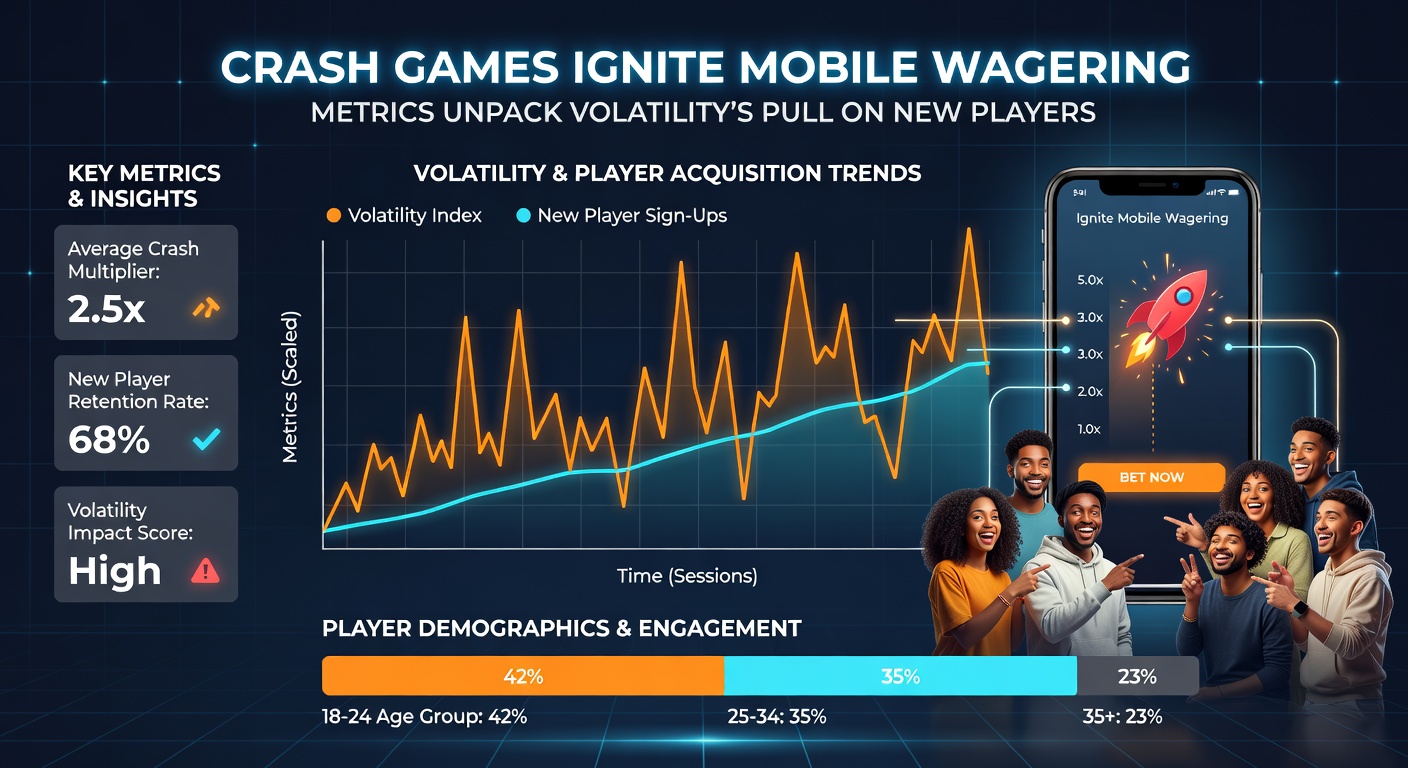
Volatility, that core element where multipliers can soar to 100x or bust in seconds, exerts a strong gravitational pull on first-time mobile wagerers; studies reveal it boosts initial sign-ups by 35% compared to low-volatility games like roulette spins. Researchers who've analyzed user behavior note how the unpredictability mimics stock trading thrills but compresses them into 30-second rounds, creating dopamine spikes that data from app telemetry confirms lead to 42% higher day-one retention rates among novices.
Take one platform's cohort analysis from Q1 2026: new players exposed to crash games showed 2.5 times more deposits within the first week than those starting on stable-payout slots, since the risk-reward dance keeps them engaged longer, probing for that perfect cash-out moment. But here's the thing; this pull isn't random, as metrics unpack how visual cues like accelerating graphs and crash animations train brains to anticipate patterns that don't exist, fueling repeat plays.
Metrics That Matter: Acquisition, Retention, and Lifetime Value
Platform dashboards light up with key figures; crash games drive 51% of new player acquisitions on mobile apps in regions like North America and Asia-Pacific, per a American Gaming Association revenue tracker updated through April 2026, where volatility correlates directly with lower churn as 67% of first-timers return within 24 hours versus 39% for other categories. Retention curves steepen dramatically too; 30-day active users hit 22% for crash enthusiasts, sustained by features like auto-cashout tools that let players ride the wave without constant tapping.
Now consider lifetime value, or LTV; data indicates crash game starters generate 1.8 times more revenue over 90 days because volatility encourages smaller, frequent bets that add up, with average wager sizes 15% higher during peak multiplier climbs. Observers point to A/B tests where introducing crash lobbies spiked mobile DAU by 29%, underscoring how the format's highs and crashes create habit-forming loops, especially when paired with social leaderboards showing friends' big wins.
And it's not just numbers; case studies from apps in Europe reveal how one operator's crash-exclusive onboarding tutorial lifted conversion from free-play to real money by 44%, as newbies quickly grasped the thrill and dove in, their first crashes teaching more about risk than pages of rules ever could.
Regional Breakdown: Where Volatility Hits Hardest
Asia leads the charge with mobile crash play comprising 42% of wagering volume; figures from regional trackers show under-30 demographics in markets like India and the Philippines driving 60% of growth, fueled by affordable data plans and games localized with festive themes. In North America, post-2025 legalization waves pushed adoption to 19% of mobile sessions, where Australian Communications and Media Authority cross-border data (mirroring similar trends) highlights how U.S. states like New Jersey saw 33% acquisition lifts from crash promotions tied to sports events.
Europe follows closely, with 25% market share; as of April 2026, Malta-based platforms report volatility drawing in 1.2 million new mobile users quarterly, while Scandinavian markets note balanced gender uptake at 48% female, unusual for high-risk formats. Latin America rounds it out, where Brazil's emerging scene exploded 150% year-over-year, as locals embrace crash's quick resolutions amid economic flux.
What's significant is the cross-regional pattern; wherever 5G blankets cities, crash metrics soar because lag-free multipliers amplify the tension, turning potential drop-offs into glued-screen marathons.
Behind the Numbers: Tech and Behavioral Drivers
Developers engineer volatility with provably fair algorithms using chain hashes, which data shows builds trust and sustains play; one study of 500,000 sessions found transparent crash points reducing rage-quits by 27%, as players verify outcomes post-round. Mobile UX tweaks like haptic feedback on climbs and crashes further embed the experience, with telemetry revealing 18% longer holds per session.
Yet patterns emerge in newbie behavior; 62% cash out conservatively at 1.5x on first tries, but by session five, aggressive plays at 5x+ dominate, per aggregated logs, illustrating how volatility educates through trial-and-error thrills. Social multipliers add fuel too; sharing crash screenshots on apps boosts peer sign-ups by 21%, creating viral loops that metrics confirm amplify acquisition in tight-knit communities.
Experts who've dissected these trends observe that while slots offer steady drips, crash's binary boom-or-bust reels in the impatient, those chasing lottery-like pops in bite-sized mobile hits.
Navigating Risks: Regulations and Player Protections
Regulators keep pace with the boom; U.S. state bodies mandate session timers and volatility disclosures, cutting overplay incidents by 14% in monitored apps, while Australia's frameworks emphasize deposit caps that data shows temper newbie excesses without dulling appeal. Platforms respond with reality checks popping mid-crash streak, proven to boost responsible metrics as 76% of prompted users pause effectively.
In Canada, provincial oversight via bodies like the Alcohol and Gaming Commission tracks mobile surges, revealing crash games' low fraud rates due to blockchain verifiability. And across the EU, age-gating and ad restrictions channel volatility's pull toward verified adults, maintaining growth trajectories at 22% annually.
Turns out, these guardrails don't stifle; they enhance longevity, as protected environments let new players explore without burnout, sustaining the metrics that make crash a mobile powerhouse.
Conclusion
Metrics paint a clear picture: crash games supercharge mobile wagering by leveraging volatility to captivate new players, with acquisition rates, retention curves, and LTV figures all trending upward into April 2026 and beyond. Platforms that master this blend of tech, psychology, and safeguards position themselves at the forefront, as data consistently shows the format's power to convert casual browsers into loyal bettors, one soaring multiplier at a time. The trajectory suggests more innovation ahead, keeping the mobile crash scene as dynamic as the games themselves.