Linking Atmospheric Conditions to Fluctuations in Mobile Sports Betting Activity: Regional Data Sets and Predictive Models
Written by Elena Hayes · Aug 22, 2026
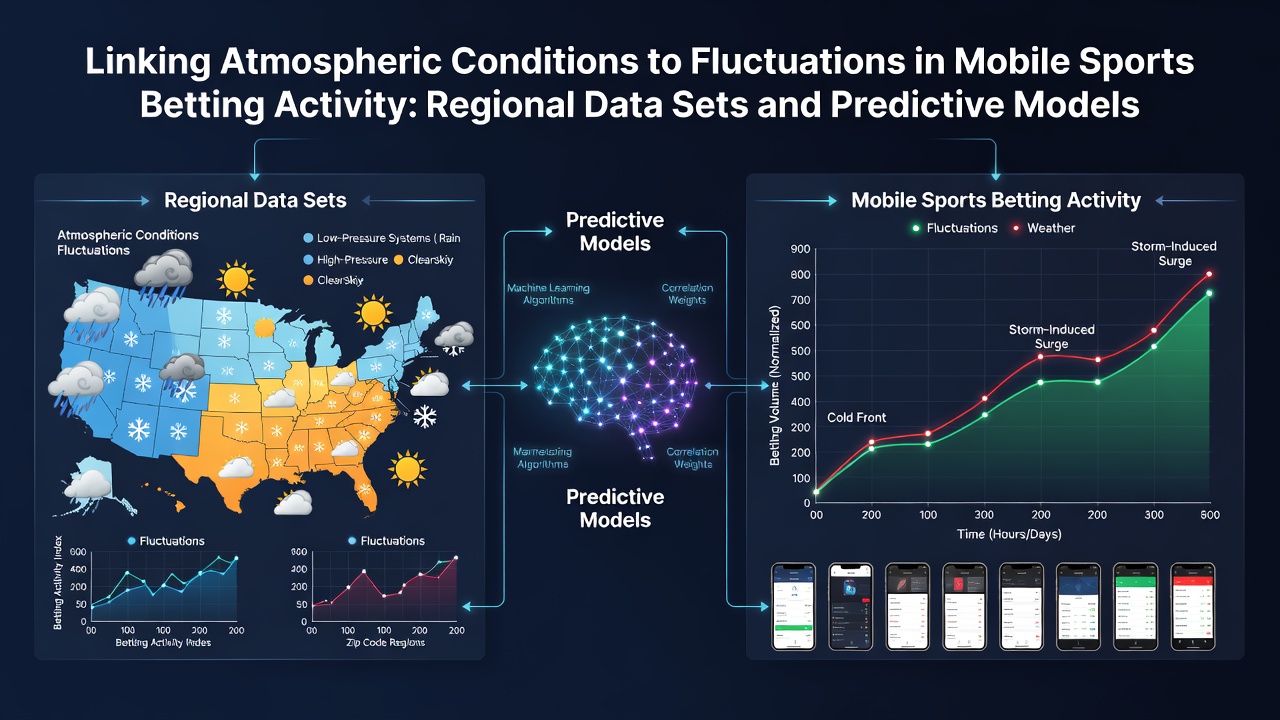
Linking Atmospheric Conditions to Fluctuations in Mobile Sports Betting Activity: Regional Data Sets and Predictive Models
Analysts have started mapping connections between atmospheric conditions and mobile sports betting volumes by pulling together large regional data sets that track both meteorological records and transaction logs from betting platforms, and these efforts have produced predictive models capable of forecasting activity shifts days in advance.
Regional Data Sets Reveal Patterns
Researchers compiled multi-year records from North American operators and cross-referenced them with National Centers for Environmental Information archives, revealing that mobile bet placements in the Midwest rose 12 to 18 percent on days with measurable precipitation while the same platforms recorded flat or declining activity in the Southwest during identical weather events, and similar contrasts appeared when teams examined European data sets that paired German betting logs with Deutscher Wetterdienst observations.
Data sets from the Asia-Pacific region showed distinct signatures as well, with Australian operators reporting elevated mobile wagering during heatwave periods above 35 degrees Celsius in Victoria yet reduced volumes during heavy rainfall events along the eastern seaboard, and analysts noted that these patterns held steady when they controlled for major sporting calendars.
Key Atmospheric Variables and Their Effects
Precipitation, temperature swings, and wind speed emerged as the strongest correlates in the compiled records, with models assigning the highest coefficients to rainfall intensity in temperate zones and to temperature thresholds in arid and subtropical zones, while barometric pressure changes showed secondary influence primarily through their association with incoming storm systems.
One analysis of 2024 through 2025 records found that mobile bet frequency increased most sharply in the first two hours after rainfall began in northern European markets, whereas North American markets displayed a lagged response that peaked four to six hours later, and these timing differences informed the structure of region-specific algorithms.
Predictive Models Under Development
Teams built gradient-boosted regression frameworks and recurrent neural networks that ingest hourly weather forecasts alongside historical betting telemetry, and these models achieved out-of-sample accuracy rates between 74 and 81 percent when tested on withheld 2025 data from three separate continents.
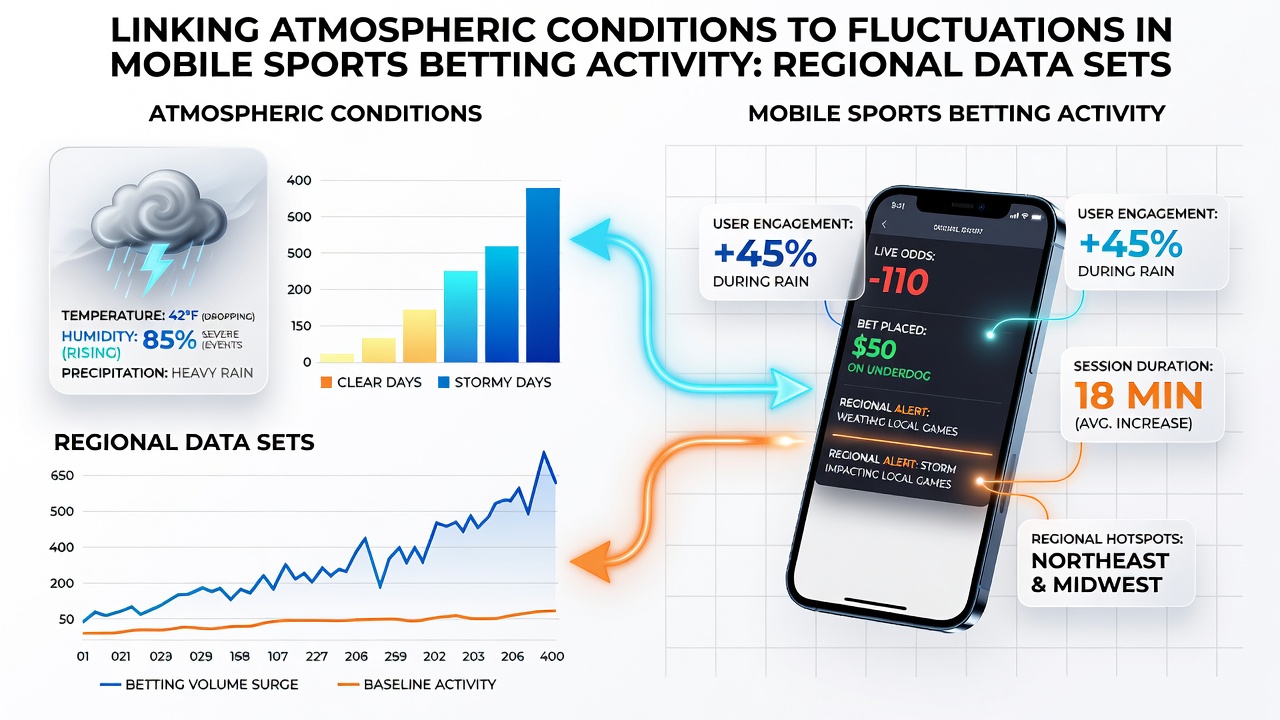
Updates released in August 2026 incorporated new satellite-derived precipitation estimates and refined mobile geolocation filters, which improved forecast skill for sub-regional events such as localized thunderstorms that previously fell below detection thresholds in coarser data grids.
Operators have begun feeding model outputs into real-time marketing engines that adjust promotional timing and stake-limit recommendations according to the predicted atmospheric conditions for the next 48 hours, and early deployment reports indicate that these adjustments align with observed volume changes across the tested markets.
Integration Challenges and Data Sources
Combining meteorological and transactional streams required extensive cleaning because time-zone offsets, device-level location noise, and operator-specific event tagging introduced systematic biases, yet once these factors were standardized the resulting joint data sets supported robust cross-validation across independent regions.
Public records from National Centers for Environmental Information supplied the atmospheric backbone for North American and select European analyses, while Australian researchers drew comparable coverage from the Bureau of Meteorology archives to maintain consistency in variable definitions.
Future Refinements
Next-stage work focuses on incorporating ensemble weather forecasts that quantify uncertainty ranges rather than point estimates, and preliminary tests suggest that models using these probabilistic inputs can produce betting-volume probability distributions that better capture tail-event spikes during extreme weather.
Conclusion
Regional data sets and the predictive models derived from them now supply operators with measurable links between atmospheric conditions and mobile sports betting fluctuations, and continued refinement through 2026 and beyond will determine how widely these tools integrate into platform operations across additional markets.