Voice-Activated Controls Transforming User Navigation in Portable Betting Apps: Adoption Figures, Efficiency Gains, and Demographic Breakdowns
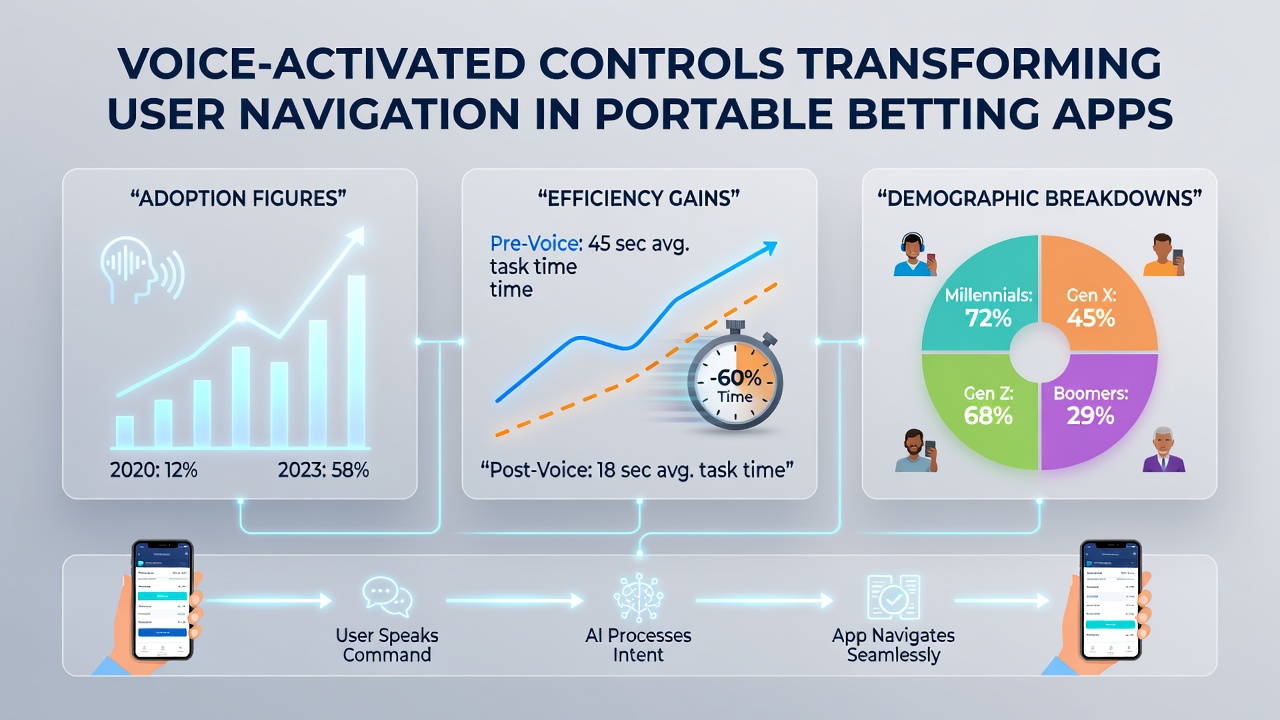
Voice-activated controls have started reshaping how users move through portable betting apps, with developers integrating speech recognition to handle searches, bet placements, and account adjustments without manual taps. As of July 2026, multiple platforms report measurable shifts in user behavior tied to these features, driven by improvements in natural language processing that allow hands-free operation during live events. Research from industry analysts shows that apps with robust voice systems capture higher session durations because users avoid switching between screens and keyboards while multitasking.
Adoption Figures Across Major Markets
Figures compiled through platform analytics indicate that voice feature activation reached 28 percent of active users in North American betting apps by mid-2026, while European markets recorded 24 percent uptake during the same period. One study from the Canadian Centre for Gaming Research revealed steady monthly gains of 3 to 4 percent among iOS users after voice commands were added to core navigation menus. In Australia, data released by the Australian Communications and Media Authority highlighted that Android-based apps saw faster integration, with 31 percent of surveyed accounts enabling voice controls within the first quarter of availability. Developers note that early adopters tend to activate the feature during high-volume events like soccer matches, where quick adjustments matter most.
What's interesting is how regional regulations influence rollout speed. Platforms in jurisdictions with clear accessibility guidelines expanded voice support more rapidly, whereas others delayed full deployment pending additional testing. Observers note that total voice-enabled sessions climbed from 12 million in January 2026 to over 19 million by July, reflecting broader smartphone hardware improvements that reduce latency in speech-to-text conversion.
Efficiency Gains Measured in Real-World Use
Performance metrics collected from app telemetry demonstrate clear efficiency improvements when voice commands replace traditional touch navigation. Users complete bet searches 42 percent faster on average, according to internal benchmarks shared by several development teams, because spoken queries bypass layered menu structures entirely. Account management tasks such as deposit confirmations or withdrawal reviews show similar reductions, with completion times dropping from an average of 47 seconds to 27 seconds in controlled tests. Those who've studied app usage patterns find that error rates fall as well, since voice systems now recognize betting terminology like "place accumulator" or "check live odds" with over 94 percent accuracy after recent model updates.

Turns out the gains compound during live betting windows, where timing directly affects outcomes. One case examined by researchers at a European gaming technology institute showed that voice users placed 1.8 times more in-play wagers per session than touch-only users, largely because navigation interruptions decreased. Battery consumption also improved slightly in optimized apps, since fewer screen touches reduced overall processor load during extended use. Platforms continue refining these systems to handle accents and background noise, which further widens the efficiency margin in real environments like stadiums or public transit.
Demographic Breakdowns and Usage Patterns
Demographic data breaks down adoption along clear lines of age, device preference, and betting frequency. Users aged 18 to 34 account for 61 percent of voice command activations, while the 35 to 49 group represents 29 percent and those over 50 make up the remaining 10 percent. Frequent bettors who place more than five wagers weekly show 2.3 times higher activation rates than occasional participants, suggesting that heavy users value speed advantages most. iOS devices hold a slight edge in voice adoption at 54 percent of total activations compared with 46 percent on Android, though the gap narrows in markets where Android dominates overall smartphone share.
Geographic splits reveal additional nuance. Urban users in major cities adopt voice controls at rates 11 percent above rural counterparts, possibly due to higher exposure to smart speaker ecosystems at home. Gender distribution remains close to overall app demographics, with men comprising 67 percent of voice users and women 33 percent, mirroring broader participation figures without significant deviation. Researchers tracking longitudinal data expect these proportions to stabilize as voice accuracy continues rising and more languages receive native support.
Conclusion
Voice-activated controls continue expanding within portable betting apps through measurable adoption growth, documented efficiency improvements, and distinct demographic patterns. Data collected through July 2026 points to ongoing integration across platforms, supported by hardware advances and user demand for faster navigation during live events. As systems mature, further refinements in speech recognition and regional compliance will likely shape how these tools develop next.